Cassowary
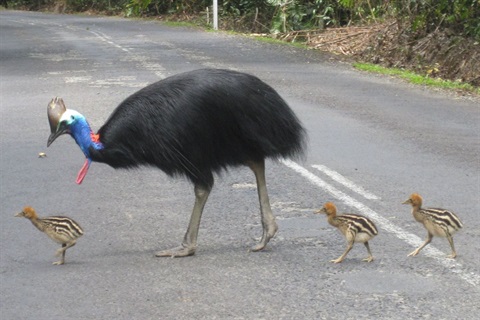
The following information was sourced from the Queensland Government site: https://www.qld.gov.au/environment/plants-animals/animals/living-with/cassowary-safety-tips
Being Cass-o-wary means knowing how to keep yourself safe around cassowaries as well as helping to protect these endangered animals. Southern cassowaries are a special sight to see but they can be aggressive and unpredictable.
- Follow these tips to help keep yourself, your family, your pets and the cassowaries safe:
- Never feed cassowaries—it is illegal, dangerous and has resulted in cassowary deaths.
- Always discard food scraps in closed bins and ensure compost bins have secure lids.
- Never approach cassowaries.
- Never approach chicks—male cassowaries will defend them.
- Always give cassowaries space and observe them from a safe distance.
- Never stop your vehicle to look at cassowaries on the road.
- Always slow down when driving in cassowary habitat.
Never feed cassowaries
- Never feed cassowaries, fines apply.
- Never allow the cassowary to access your food. Cassowaries fed, intentionally or unintentionally, by humans can become bold and aggressive towards people.
- A cassowary that has been fed by the roadside begins to associate cars with food, this increases the risk of the bird being hit and killed by a car.
- Always keep food, cooking and cleaning items secure.
Give cassowaries space
- Never approach an adult cassowary—they’re wild animals and can be unpredictable. If you see a cassowary, admire it from a safe distance. A cassowary may feel threatened if approached.
- Never approach a cassowary chick or get between a chick and its dad. Cassowary dads are very protective of their young and will defend them.
- Always keep a safe distance while taking photos of cassowaries. Never chase after a cassowary for a photo opportunity.
Drive with care
- Slow down when driving in cassowary habitat. Cassowaries can cross the road unexpectedly.
- Never stop your vehicle on the road to look at a cassowary. This poses a risk to you, other drivers and the cassowary. Reduce your speed, safely avoid the cassowary and indicate to other drivers there is a cassowary nearby.
- Keep an eye out for young cassowaries following an adult across the road. Young cassowaries are stripy or brown and can be harder to see.
- Look out for bright yellow ‘Recent Cassowary Crossing’ signs on the side of the road. These signs help to notify drivers that a cassowary has been reported crossing the road in that area recently.
Tips for campers
Be Cass-o-wary when camping in cassowary habitat:
- Keep food and rubbish secured by packing it away in your car, caravan or tent.
- Cassowaries have been known to enter campsites in search of food and can become aggressive.
- Make sure you have an item, such as a broom or a chair, close by to place between yourself and a cassowary if it approaches your campsite.
Always maintain a safe distance from a cassowary.
Download the Be-Cass-O-Wary Brochure